Pet Ringworm
# Scaly and inflamed skin
The goal of Our Blog to help every one interested in Animals behavior and Pets World to know all the information required to be a good Breeder... Every thing you need about Dogs or Cats breeds and Food you can find here
Cancer is a tremendously broad and complicated subject. To keep this article manageable, I have only scratched the surface of the subject. I am not a cancer specialist, but I deal with tumors of my client’s older pets on a regular basis. I try to furnish them with sound, practical advice during these difficult times. Many cutting edge cancer therapies offered by veterinary oncologists and hub veterinary centers undoubtedly do extend the lives of pets. But I question the quality of these short periods added to the pet’s life and the emotional cost involved. I also have doubts whether these therapies are truly performed for the good of the pet. Instead, they are often done for the peace of mind of owners unwilling to accept the fact that life must come to an end – often before we want it to.
Your pet’s cells are forever growing and replacing themselves, and growth gone awry is the basis of all cancer. Normal cell growth and replacement fills a bodily need. When cells grow for any reason other than the good of the body we call them cancerous or a tumorous. Cell growth is strictly controlled by instructions written in DNA code in every cell. In tumorous cells an error has occurred in this script allowing the cells to grow out of control. When these errors are minor, the cells still look and act a lot like normal. We call tumors formed from these cells benign. When the errors are major we call the tumors malignant.
Small snippets of tumor tissue are called biopsies. Examination of biopsies allows us to determine if the growth is benign or malignant. A fibrous capsule often covers benign tumors and relatively few of the tumor cells are actively growing. Some common benign tumors of dogs are the lipomas or fatty tumors that form under the dog’s skin and the cauliflower-like papillomas that form within the skin. Under the microscope, the cells of these tumors look very much like normal tissue. The borders of these tumors are usually regular making them easy to remove surgically. Before I remove skin tumors from a dog I shear its coat off close to the skin. I send the owners home with a surgical marker to mark the position of even the smallest tumor. Just before surgery, I infiltrate the area of the tumor with a combination of Novocain and epinephrine. This numbs the area and stops the loss of blood. Then I excise the tumors with a scalpel and suture the incision. I freeze or cauterize off small papillomas. I have never had a tumor of this type regrow. Lipomas or fatty tumors are present just under the skin. They are only found on fat dogs. If the dog looses sufficient weight, these tumors shrink or disappear on their own. Because they are invariably encapsulated they are quite easy to remove. I have never had one regrow. Lipomas that have grown around nerves or large blood vessels are more difficult to remove. The outcomes are also good if sufficient care is taken to preserve the nerves and blood vessels.
Tumors that arise from glandular cells are called carcinomas. Tumors that arise from the skin, muscle, bone and fibrous connective tissues of the body are called sarcomas. When cancers are found in their original location they are called primary tumors. When they have moved to a new location in the body they are called metastatic tumors. Only malignant tumors have the capacity to move to new locations. Because of this and their invasiveness, they are life threatening. Cancers that move often become trapped in the sieve-like structure of the lungs, liver, bone marrow and kidneys. When they do the symptoms that we see are do to the physical destruction of these organs more than to the tumor cells themselves. Metastatic tumors are usually highly vascular. That is, they are rich in blood vesicles to supply the nutrients that fast-growing tumor cells require.
Cancer has many causes or risk factors. Agents that increase the likelihood of cancer are called carcinogens. Some of the risk factors are written within the genetic code you pet was born with which make it particularly susceptible to one form of cancer or another. Boxers and the giant breeds of dogs are renown for their predisposition to tumors. Other risk factors, such as cancer causing or oncogenic chemicals, may be found in the pet’s environment or diet (formaldehyde, chlorine-containing compounds, nitrates, etc.). Some of these chemicals cause the cells genetic code (DNA) to mutate and so are called mutagens. Physical agents (radiation, asbestos, etc.) can also cause cancer through chronic irritation and inflammation. Certain viruses have also been found to cause cancer in animals. Often cancer results from the combined effects of genetics, physical and chemical carcinogens. The immune system plays an important role in detecting and eliminating new cancers. Any factor that causes immunosuppression increases the incidence of tumors. Feline immunodeficiency disease (feline AIDS) and feline leukemia both of which are caused by retrovirus are conditions leading to a variety of tumors in cats. Hormones that cause body organs to proliferate can also cause cancer. Breast or mammary tumors in dogs are quite common and occur only in older unsprayed females. This is because of the biyearly hormone rises in unsprayed female dogs associated with their estrus or heat cycles.
As in people, the earlier we detect and remove cancers from pets the more successful we are. Skin tumors are rather easy to diagnose. But tumors within the body often only show as weight loss, low-grade fever, weakness, and lethargy. By the time these cancers are large enough to detect they are in advanced stages and difficult to treat.
X-rays are my first choice in diagnosing internal tumors in dogs and cats. Many tumors are bulky and distort the shapes of the organs they reside in making them readily apparent on x-rays. Many can also be seen using ultrasound equipment. Large veterinary facilities and universities have more sophisticated CT and MRI imaging equipment. Since smaller veterinary hospitals do not have this equipment, we make more use of biopsies and exploratory surgery to diagnose cancer. When the abdomen is opened and all the organs inspected, tumors that were not visible on radiographs are often obvious. When they are not, biopsies of the major organs examined by a pathologist often discover the tumor. Pathology reports also reveal the aggressiveness of tumors and the likelihood that they have already moved or will move.
The most common cancers in dogs are skin cancers. Skin cancers make up over half the total number of cancers that occur in dogs. The most common skin cancers that I encounter are papillomas. These are small cauliflower-like viral tumors that proliferate as a dog ages. They are common on the mussel, trunk and extremities of dogs with graying hair. The vast majority are not malignant and cause no damage beyond being nicked or worried into bleeding by the dog as it grooms.. The next most common cancer in dogs are lipomas. They often occur multiply just under a dog’s skin. They are very rare in cats and ferrets. The next most common skin cancer in dogs is the mastocytoma (or mast cell tumor). These distinctive tumors are oval, firm and slightly raised. Sometimes their center is brown or bluish. Mastocytomas are only locally invasive (malignant) and do not metastasize to other organs. Cancerous cells project outward from the tumor into what appears to be normal skin. So when I excise them, I remove three times the diameter of the visible tumor to be sure that all tumorous cells are removed. The biggest problem occurs with mast cell tumors on the extremities in that insufficient skin may be left to close the excision wound.
Skin tumors in cats are much more to be malignant than those of dogs. I remove them as rapidly as I discover them and always send tissue from the tumor to a veterinary pathologist for evaluation. In too high a number, these tumors have already metastasized to other locations before they were removed.
Mammary gland tumors have a high incidence in older unsprayed dogs. They begin to develop between six and ten years of age and are caused by the hormone progesterone associated with estrus, and reproduction. The most common form is the fibrous and hard mixed mammary carcinoma. They form most frequently in the posterior breasts nearest the rear legs. Often the breasts involved give milk or milk-like fluid. Most are well encapsulated and easy to remove. They are usually not highly malignant and most of the time I get to them before they have metastasized. Of special concern to me are tumors that are ulcerated and which have infiltrated the skin. These are often malignant. I also worry about these tumors when they involve the lymph nodes of the groin and base of the foreleg. I have sent sections from the same tumor of this type to two different pathologists and gotten differing opinions as to their degree of malignancy. This is because determination of malignancy is a subjective process. Spaying females before their third or fourth heat cycle can prevent these tumors.
Lymphatic tumors are tumors of certain white blood cells called lymphocytes. They are classified as lymphosarcomas, lymphomas and lymphoid leukemias. These tumors are quite common in cats, ferrets and dogs. In cats, these tumors occur under the immunosuppressive effect of the feline AIDS and Feline Leukemia virus. They are the second and third most common tumors in ferrets and dogs respectively occurring most commonly in Golden and Labrador retrievers and Doberman pinchers. In ferrets and dogs this cancer appear spontaneously. The tumors appear as sold growths called lymphomas which begin in the lymph nodes or bone marrow or as individual cells freely circulating in the blood called leukemia. Animals as young as four years may develop these tumors. These animals are often presented to me with painless, enlarged lymph nodes over the whole body but occasionally it is a single node that is enlarged. Some of the dogs have an increased number of abnormally large lymphocytes in their blood stream but most do not. At this stage the pets do not appear to be ill. Other animals, particularly cats, develop this form of cancer in the walls of their intestines, which leads to diarrhea and weight loss. A biopsy of one of the enlarged superficial lymph nodes confirms the diagnosis. This type of tumor in dogs responds well to chemotherapy. It does not respond well in cats. The drugs commonly used to treat lymphomas are vincristine, L-asparaginase, cyclophosphomide, doxorubicin, and prednisolone. With this treatment, three-quarters of the dogs caught early in the disease live an additional six month or more. Without treatment their average future life span is about four months.
Tumors of the mouth, lips and tongue are relatively common in dogs and cats. These tumors often bleed by the time they are noticed. A large percentage of them are highly malignant – especially in cats. A variety of tumors form here. They include squamous cell carcinomas, adenocarcinomas, fibrosarcomas and malignant melanomas. Dogs that develop these tumors are generally six to ten years of age. A big problem in dealing with these tumors is that they often surround important structures of the mouth and are therefore next to impossible to remove in their entirety. But most of these tumors can be surgically removed (debulked) and the dog or cat then treated with radiation. This procedure is particularly stressful to cats that often have to be force-fed or fed intravenously. I am not inclined to suggest this procedure to most clients but I do make them aware that these procedures exist. There is some evidence that the viruses responsible for papilloma are involved in the formation of some of these oral tumors in dogs. Chemotherapy has not been very rewarding in these cases. Before considering chemotherapy for your pet, ask what the average increased life expectancy the procedure might be. Specialists tend to be highly optimistic about the benefits of their specialty so take their numbers with a grain of salt and really try to pin them down.
Bone cancers or osteosarcomas occur frequently in large and giant breeds of dogs. They tend to form at the growth plates near the ends of the long bones of the legs. These dogs are often brought to me because of lameness. X-rays of these tumors are highly distinctive and easy to diagnose. Because they often metastasize to the lungs, I include a chest film of every dog I radiograph for this problem. Not all cases are so advanced that tumors in the lungs can be detected. Late in the disease these dogs may have a cough. Neutered male dogs have a higher risk of this disease, as do dogs with a previous injury to the leg involved. The best treatment for these tumors when they occur on a leg is the removal of that leg. A chemotherapeutic drug called Cisplatin along with radiation treatment is helpful in cases where the tumor is inoperable because of location. The drug, Feldene (pyroxicam) is a good analgesic in these dogs. This drug may also have some mild chemotherapeutic effects.
Nutritional support is very important for all cancer patients. This is especially true for cats because minimal cancer-induced stress stop them from eating. Cancer cachexia is a form of protein malnutrition that affects many cancer patients – especially those where the disease is widespread. Offering flavorful, highly digestible and energy-dense diets can reverse some of the signs of cancer. The best diets for cancer patients are rich in fat and protein and low in carbohydratesYour veterinarian will determine a proper puppy vaccination schedule for your pet, but you still need to be aware of some important milestones.
Why?
Because missing even one vaccination may expose your puppy to a variety of diseases.
Your puppy will receive his or hers first series of vaccines between 6 and 8 weeks of age. More will follow.
I will show you what vaccines, and at what age, your puppy will receive, but first, let's review some important...
| |
Just like babies, puppies can experience a number of adverse reactions to vaccination.
Here are some of the symptoms and what you should do if your puppy displays any of them…
Depression | May occurs in the first 24 hours after vaccination. If it lasts longer than 24 hours, call your veterinarian | |
Vomiting | Just like depression, may occur in the first 24 hours after vaccination. Contact your veterinarian if it lasts beyond 24 hours | |
Diarrhea | Same as vomiting | |
Swelling | This is probably an allergic reaction. Call your veterinarian immediately | |
Shaking | Same as vomiting |
The dog health guide includes additional symptom charts. Each chart starts from the specific symptoms of a particular ailment and tells you the recommended path of treatment for each one, as well as advising whether veterinary care should be sought – and if so, how urgently.
Your veterinarian will determine a schedule for your puppy. What follows is just a sample puppy vaccination schedule.
Age | Vaccination | |
6 weeks | Distemper, Deworming, Fecal flotation, Heartworm preventive | |
9 weeks | Distemper, Parvo, Corona, Bordetella | |
12 weeks | Distemper, Parvo, Corona | |
16 weeks | Distemper, Parvo, Corona, Rabies, Fecal Flotation, Lyme | |
Annually | Distemper, Parvo, Corona, Rabies, Fecal Flotation, Heartworm test |
Discuss your puppy's vaccination schedule with your vet during the first visit.
• Heart disease.
• Liver disease.
• Breathing problems.
• Diabetes.
• Digestive problems.
• Arthritis and joint weakness.
• Skin disease.
• Heat intolerance.
Furthermore, several studies have shown dogs who remain lean will live much longer than those whose systems must cope with too much weight.
Detecting the problem
How much weight is too much? Sometimes it is difficult to tell if your dog is overweight, particularly if it is one of the hairier breeds, but there are few general rules of thumb.
1. Look down at your dog from above. You should be able to see a defined ‘waist’ just above the hip bones. If you cannot see the waist, your dog is too heavy.
2. You should be able to see and feel your dog’s ribs. While they should not be sticking out and your dog should not look like a walking skeleton, you should be able to see a rib or two and be able to feel them easily. If you cannot, your dog is overweight.
3. Your dog should not have a hanging belly. Some altered females have a slight pouch as a result of spaying surgery, but this should consist only of hanging skin, not fat. You can tell by gently squeezing the pouch; if the skin fold of the pouch is more than 0.5 inches thick, your dog is fat.
If your dog is overweight, it is likely eating too much and you have probably been too liberal with dog food, table scraps and/or treats.
Better habits
Dogs are carnivores, yet many dog foods list corn and corn meal as the most plentiful ingredients. These and other grain-based ingredients can offer clues to the underlying causes of obesity, as they are carbohydrates. Canine digestive systems are not designed to cope well with high-carbohydrate diets.
As a result, weight loss supplements have been introduced, with ingredients designed to help reduce the absorption of calories. Humans have used similar products.
Better eating and exercise habits will also speed the process of canine weight loss. Your dog needs to be walked every day and should never be given leftovers from your table.
When your dog takes in more calories than it burns off, the resulting surplus is stored as fat. In fact, as little as one per cent extra caloric intake (i.e. an extra biscuit or two per day) can result in a 25 per cent increase over ideal body weight by middle age.
If you want to give your dog a healthy treat, you can try a home-cooked variation, like cooking up a healthy chicken broth with some vegetables. You can try stewing some chicken livers or other organ meats that your butcher would otherwise throw away—so you can get them cheap or perhaps even free. Just make sure to strain out all bones.
Be sure to ask your veterinarian for advice regarding weight loss supplements, exercise and/or healthier food for your overweight dog.
Dental disease is one of the most common health problems for dogs and cats. In fact, an estimated 85 per cent of all dogs and cats suffer some degree of dental disease.
However, some animals that have very poor dental hygiene show no outward symptoms at all.
If your pet’s mouth is neglected, teeth may fall out, painful infections of the tooth root can occur and your pet may develop further diseases in other body organs, such as the kidneys, liver and heart. Keeping your pet’s mouth healthy can improve both the quality and the length of its life.
Your veterinarian can advise you on how best to maintain your pet’s dental health. Many pets require scaling (i.e. gentle removal of tartar and plaque on the tooth surface and under the gum line) and polishing, much like their owners—the main difference being the teeth are cleaned when the pet is under general anesthesia.
Some of your pet’s teeth may require X-rays, as these enable your veterinarian to study the roots and the bones around them. Root canals or extractions can be performed if necessary. Some pets even require braces.
Daily brushing with pet-specific toothpaste, feeding plaque-reducing foods or treats and using mouthwash and tooth gels will all help prevent dental disease in your pet.
Even older pets can be trained to accept daily toothbrush use. Some pet toothpastes are flavoured with poultry, beef or salmon to make them more attractive.
Oral hygiene solutions can also be added to your pet’s drinking water to further fight plaque and bad breath. For more information about keeping your pet happy and healthy through proper dental hygiene, talk with your veterinarian.
Julie Schell, DVM, is based at the Bow Bottom Veterinary Hospital and Boarding Centre
Medication designed for humans can be used for our pets as well. Interestingly, Flexicose and Synflex are quite effective as dog arthritis medication as well. If you try to do some research, you will see that Flexicose has a product line targeted for pets. Just look at the pet label attached to it. But know that this is the same formula as regular Flexicose designed for humans. So, this is a perfectly safe medication.
At around ages 8 to 9, dogs will start to suffer from arthritis. They will start to show some of the symptoms of the disease. Just like humans who are in their later years, such diseases will usually come about. The good thing though is that, there are a number of options available to address this condition. One can go for a dog arthritis medication or not. It all depends on how you plan to approach this. First, let us try to check the non-medication option for dogs with arthritis.
The Number One "Dog Arthritis Medication" is a Diet!
The more natural way of approaching this condition of your dog is through a diet. With this, your dog will be able to keep his or her weight at a normal level. Having just the right weight will not aggravate the arthritis condition of the dog. Being overweight will just worsen the symptoms. To get the best results, put your dog on a diet--this will be much better than putting it on medication. With the right diet, your dog will enjoy more benefits of being healthy.
Could your dog have canine hip displasia?
The right exercise regimen is important. Like humans, too much exercise will be bad for the health and will pose risk of being injured. For dogs with arthritis, too much exercise will put more stress on the joints--making it more damaging on its part. Most dogs, if left unchecked, will really go hyper and may overdo the playing and the running around--too much for their own good. If you will notice, after a while of hyper activity, your dog will start to limp and may already feel the pain with the over-activity. Dog arthritis medication will prove to be helpful especially if your dog is in the later years as well. Also, another extreme: too little exercise, will be a bad thing as well. Remember that the purpose is to keep the weight at a normal level, so with little exercise, your dog is bound to gain weight.
Types of Dog Arthritis Medication
If you have done what you can, putting your dog on a diet and making it do some exercises, and still no results--you may have to employ another approach. This time, you can go for a dog arthritis medication. There are three choices you can go with: a prescription drug like Rimadyl, then there are over-the-counter drug as aspirin, and lastly, natural glucosamine supplements.
You can search the Internet and find a lot of articles about the dangers of prescription dog arthritis medication. It is important to do some research on your own, so that you also learn the dangers of some medications for dogs with arthritis. For example, do you know that Rimadyl, though safe for most dogs, can be deadly for some? Without the knowledge from your research, you may have put your dog on an unnecessary risk.
Liquid Glucosamine Works!
Natural supplementation is another method of dog arthritis medication. This is quite popular and has been used by many dog owners. The reason: safety factor. With glucosamine, there are no reported significant side effects on dogs with arthritis. Unlike an over-the-counter drug as aspirin, which resulted to a near death experience of one of our dogs, liquid glucosamine is just unparalleled with its effectiveness and safety.
More Info About Using Glucosamine for Dogs:
The best approach we would recommend is to go for glucosamine first. Before treating your pet with other dog arthritis medication, give the glucosamine some time to take effect. It is worth a try than to risk having some side effects on your dog with arthritis. With glucosamine, aside from the other benefits, it will not cost you that much as well.
Dog diarrhea is not a disease but a symptom telling you that your dog is sick. The common cause of diarrhea in dogs is what they eat. Knowing this there are several ways on how to cure dog diarrhea at home to make your dog healthy again.
1. Change in Diet
When a dog has diarrhea its digestive system is currently sensitive. To help your pet stop feeding the usual food to it and change it to foods that are mild to the stomach. This is done by adding cooked meat and rice or potatoes with no fat and is proven to be an effective way on how to cure dog diarrhea at home. The serving is also smaller than the usually to help your dog in digesting its new diet. You also need to increase your dog’s water intake to keep it hydrated. You should also add electrolyte supplements to overtake the dehyrdration caused by diarrhea.
2. Clean you Dog’s Food and Water Bowls
Always clean your dog’s feeding and drinking bowls to prevent it from ingesting more bad bacteria which can aggravate its condition. Spoiled food particles could also worsen your dog’s diarrhea so clean its feeding bowl thoroughly. You may need to get your dog a new feeding bowl if you have not clean the old one for weeks. Thoroughly rinse all bowls to remove soap particles because if your dog eats them it will worsen its condition. Maintain a clean hygiene for your dog especially on food. This is essential in how to cure dog diarrhea at home
3. Natural Remedies
Food rich in fiber and water will be good for your dog when it has diarrhea. Probiotics are also good as the imbalance between good and bad bacteria is a very common cause of diarrhea. Combining these will greatly improve your dog’s condition.
4. Oral Rehydration Solution
Dogs need electrolytes too. ORS is a great source of these electrolytes to keep your dog hydrated after losing so much fluid when it defecates. Mix the ORS in your dog’s drinking water. If your dog does not like the water’s taste you may have to use a syringe to help your dog in taking the solution.
Knowing how to cure dog diarrhea at home is very important to every dog owners. To be able to treat dog diarrhea immediately the first source of cure should be where the dog lives. This way getting rid of diarrhea in dogs will be quicker and more effective.
Spaying or neutering your dog can seem cruel, but if your dog or bitch is not spayed or neutered, the results can be far more serious, particularly if litter after litter ofunwanted puppies are born. There are two camps when it comes to spay and neuter surgery, those who agree with it, and those who oppose it.
Those for spaying and neutering include many dog shelters and rescue groups, who often sterilise all of the animals that they adopt. Some advocacy groups believe that spaying and neutering should be law for all dogs and cats. Many dog owners believe that dogs should not be allowed to create unwanted litters.
On the opposite side of the spectrum, there are many pet owners and animal care workers who think that sterilising animals is cruel, and that pets shouldn't have to lose their reproductive capacity. The cost of the surgery also prevents some families from having it done. Furthermore, myths about canine reproduction can put people off (including dogs turning into wimps, and bitches becoming fat.)
Neutering male dogs often means that they roam less, mark territory less, and are less dominant with humans and other animals. Neutered dogs are often healthier.Female dogs who have been spayed suffer less from heat cycles that can lead to personality changes.
Dogs and bitches do not gain weight simply through sterilisation; this is controlled by diet and exercise, or genetic precondition.
Many animal experts believe that spaying and neutering surgery should be free in order to encourage dog owners to sterilise their pets. The surgery is comparatively major, however, and particularly amongst bitches who have already had a litter it can be difficult and time-consuming. The operation includes pre-surgical exams, anaesthetisation, preparation and the actual surgery itself.
Those pet owners who have taken the decision not to spay their bitches or neuter their dogs have a right to their choice, but they should take responsibility for their animal. For instance, if a dog has a surprise or unwanted (by the owner) litter, then the following essentials must be remembered:
Distemper is a highly contagious viral disease of domestic dogs. Some other species, including ferrets, skunks, and raccoons, are also affected by this disease.
The virus is spread primarily by direct contact to a susceptible dog from a dog with the disease. Coughing can spread the virus over short distances. The discharge from the nose is heavily laden with the virus.
As with many infections, the clinical signs can vary from one dog to the next. The main signs are fever, loss of appetite, a thick yellow discharge from the nose and eyes, coughing, and seizures.
There are many diseases that cause coughing, fever, loss of appetite, or seizures. However, this combination is unique to canine distemper. If the diagnosis is in doubt, a blood test can be performed for confirmation.
As with most viral infections, there is no drug that will kill the virus. Antibiotics are used because many secondary bacterial infections occur. Intravenous fluids, cough suppressants, and drugs to control seizures may be used. Intensive nursing care is essential. This is best accomplished with the dog in the hospital.
Usually, but not always. Some may be left with persistent nervous twitches (chorea) and recurrent seizures.
A very effective vaccine is available to protect dogs against distemper. It is given to puppies, as young as 5 weeks of age, in a series of 3-5 injections. Annual revaccination is strongly recommended.
Distemper is a world-wide disease. Fortunately, vaccines have been very effective in reducing its incidence to very low levels in well cared-for dogs. Stray dogs can be a source of the virus, as can skunks, ferrets, and raccoons.
Every dog is unique. Some are star athletes, while others are couch potatoes. Some can fit inside a purse, while others can barely fit in the backseat of a car. Some are cute and cuddly, while others are noble and independent. Whether your dog is fast or slow, big or small, affectionate or aloof, there is one thing that all of our canine companions have in common: although it’s not a glorious activity from our human point of view, dogs love to sniff each other’s butts.
Of course it seems crude to us of the human variety, but in the dog world, sniffing another’s rear end is simply a social custom. Not unlike a handshake and introduction, or an exchange of business cards, dogs gain valuable information from sniffing around down there. Each dog has a unique scent that is produced by structures called anal glands (or anal sacs). While many owners aren’t even aware that these glands exist, they play an important role in a dog’s social behaviour; dogs use this scent to identify one another, as a form of communication, and as a way to mark their territory.
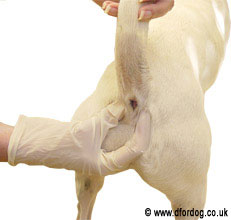
Anal glands are located just beneath the skin on either side of the anus (at positions 4 o’clock and 8 o’clock). They secrete a foul-smelling liquid which travels through small tubules to openings on either side of the anus. Believe it or not, every time your pet urinates or defecates, a tiny bit of this liquid is released as well, contributing to your dog’s personal fragrance. Similarly, when two dogs meet in the park, the action of raising their tails puts pressure on the anal glands, causing the butt sniffing to start in the first place.
The reason most owners are oblivious to the existence of anal glands, is because most of the time, they don’t cause any problems. For the majority of dogs, anal glands go about their business and express their liquid with each bowel movement and under appropriate social circumstances. However, in some cases, anal glands fail to empty sufficiently and can cause a number of issues for your pet.
The most common problem with anal glands occurs when lack of expression (emptying them) results in impaction. This is extremely uncomfortable for the dog who will usually let his owners know that there is a problem. Typical signs of anal gland impaction include scooting (dragging their rear ends along the ground) or licking/biting at their rear end. Some dogs will also present with loose stools. Fortunately, anal gland impaction can usually be cleared up quickly by your veterinarian. Veterinarians (as well as some breeders and groomers) are proficient at manually expressing anal glands to remove all of the secretion that has built up inside them. Often, one trip to the vet’s office will be enough to relieve your dog’s discomfort, however for other dogs anal gland impaction is an ongoing problem.
There are a variety of reasons why a dog might have trouble expressing its anal glands properly. Sometimes it is simply due to the conformation of the particular dog, or breed of dog. Other times it depends on the thickness of the secretion itself which may be too viscous to express easily. Also, the size and consistency of an animal’s stools can affect anal gland function. Stools which are too small or too soft might not put sufficient pressure on the glands to cause expression. For dogs who are suffering from chronic or recurring anal gland impaction, it is important to make sure they eat a high quality food which is high enough in fibre to ensure large solid stools. In some cases, it is recommended that a dog’s anal glands be surgically removed. This is a fairly simple procedure that can permanently solve the problem.
In addition to anal gland impaction (an uncomfortable, but fairly benign condition), some dogs will also suffer from infections and abscesses of the anal gland. This occurs when bacteria travels from around the anal opening through the tubules to the glands. When this bacteria builds up, serious infections can develop. If left untreated, abscesses can develop fairly quickly. In this case, dogs generally experience pain (as opposed to mere discomfort). Dogs will often present by biting or growling when one tries to touch them anywhere in the general area. Anal gland infections can be treated with antibiotics from your veterinarian. If the infection progresses to the abscess stage however, other complications may arise. It is therefore important to bring your dog to the vet as soon as you notice any signs that might indicate an anal gland problem.
For those dog owners who have never had to deal with an anal gland problem, consider yourselves lucky. As unpleasant as it may be to think about, your dog’s anal glands are as much as part of him as his cute little nose and his fluffy tail. Now that you know they exist, it is important to watch for any signs of anal gland problems in your pet.
It seems like broken bones are something that many pets (and kids) go through at some point in their lives. It can be something as simple as falling off the couch or as severe as being hit by a car. Just like there are many ways to break a bone, there are many ways that your veterinarian can fix a broken bone. We will introduce different methods of fixing broken bones and also some complications that can happen after a bone has been broken.
First we will go over the basics of bone healing. This is important because when we ‘fix’ a bone, we are not magically gluing the bone back together. We are only putting the pieces close to each other so the body can heal faster. Very often, when broken bones are left untreated, the break either never heals or heals in the wrong way. The animal may never be able to use that leg again. Over time, the body heals by creating a lot of cartilage in the area of the break. This is called a ‘callous’. On an X-ray, the callous looks like a large swelling. The body gradually breaks down the cartilage in the callous and deposits bone in its place. The bone then reorganizes into the proper structure. At this point the bone is considered to be healed.
A break in a bone is called a ‘fracture’. There are various typeswounds of fractures. The type of fracture and the bone that is involved, will determine how it will be fixed. For example, fractures can be a simple break or the bone may be shattered into tiny fragments. A simple break is much easier to put back together than tiny fragments. The fracture may or may not break through the skin. A fracture that breaks through the skin may allow bacteria to get in and cause an infection.
Your veterinarian will decide what method is best for your pet’s fracture. Many pets get a cast. Casts are considered good to use on young animals with simple breaks because they will heal very quickly. Another method is the ‘pin and wire’ solution. In this case, a pin is placed inside the bone and wires are put around the bone to hold it together.
Two other methods of fixing a fracture may or may not be offered by your veterinarian. Both of these methods require more equipment and are much more expensive. However, they are often a better choice for very complicated fractures. The first is a ‘bone plate’. A thin, long, rectangular piece of metal is placed inside the leg, directly beside the bone. Screws are then placed through the holes in the plate and are screwed into the bone. The second method is called an ‘external fixator’. It is external because the metal bars are outside of the leg (as opposed to the bone plate). The metal bars are clamped to long screws that are screwed into the bone. Unlike the bone plate, which remains in the leg for the animal’s life, the external fixator is removed once the bone has healed. Keep in mind that veterinarians often use a combination of these various methods, and that there is always more than one way to properly fix a fracture.
Most animals heal very well. The length of time that it will take depends on how old your pet is, how bad the fracture is, and if there are any other medical problems. However, sometimes the bone does not heal properly. This is usually because the bones are not kept stable enough. When the bones are allowed to move even a tiny bit, the blood supply and the callous are disrupted. A fracture that is constantly moving will not heal. Very often this happens with pets that are allowed to run and jump before the bone has entirely healed. In this case the pet can re-break the bone and will have to have it surgically fixed. Sometimes the bone takes too long to heal. In this case the veterinarian may decide to either wait and let it heal over time, or do a second surgery to speed up the healing process.
Broken bones are common in pets. Your veterinarian will be able to determine the best method to fix the fracture or may refer you to another clinic if the fracture is complicated and needs extensive repair. It is very important to work with your vet to reduce the risk of complications by taking good care of the fracture site and restricting your pet’s activity. With luck, your pet will heal up quickly.
Dog has asthma – asthma in cats
Animals Can Suffer From Asthma
Asthma is a disease that can affect both dogs and cats. Also known as allergic bronchitis, asthma is an inflammation of the airways that is caused by an allergic reaction. Asthma results in an obstruction of the airways when the bronchi (the air passages in the lungs) fill up with mucous and go into spasms. It is far more common in cats than dogs.
Dogs and cats of any age can get asthma, but it occurs more commonly in young and middle-aged pets. The primary sign is coughing. Owners often report wheezing and, in rare cases, respiratory distress. In some cases, pets may become lethargic and stop eating, resulting in weight loss. It is rarely life threatening. Between episodes, pets are usually normal.
To diagnose asthma, it is necessary to take an x-ray of the chest to rule out other respiratory medical problems. Once a diagnosis of allergic bronchitis has been made, treatment often consists of steroids, antihistamines, bronchodilators, or a combination of these drugs. In severe attacks, an injection of epinephrine may be necessary.
The prognosis for control of this disease is excellent, with most pets living happy and normal lives with the help of life-long medication. Unless an underlying cause can be determined, a cure is unlikely. Your veterinarian can help to determine both the cause of asthma as well as the treatment options available for your pet.
Sponsored by Premium WordPress Themes. Designed by Adii. Converted to Blogger Templates by eBlog Templates